
Starting soon
Our programmes are being prepared now. None of them is running yet. We will share real news, with real photos, as each one begins.
The problem
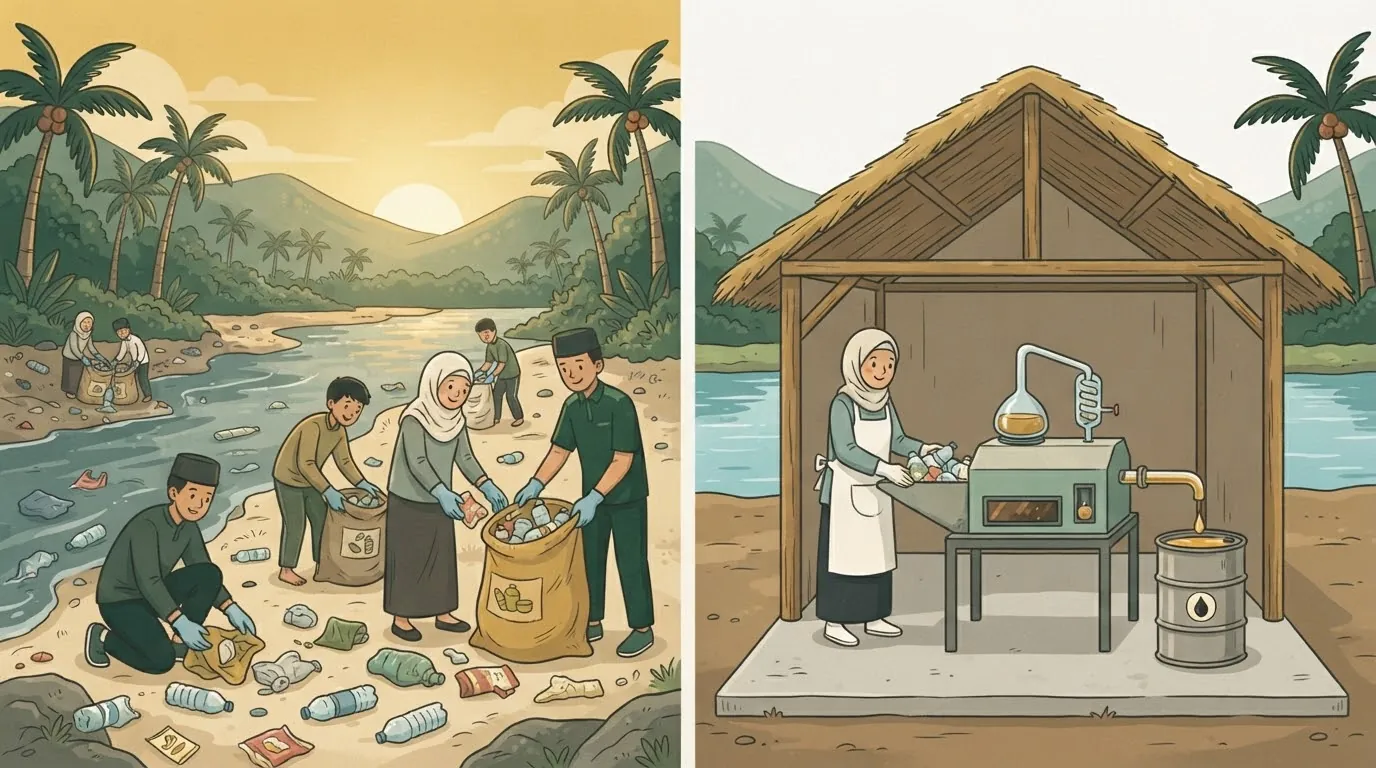
Indonesia makes about 7.8 million tonnes of plastic waste a year. About 4.9 million tonnes of it isn't properly handled, and around 346,500 tonnes reaches the sea, mostly carried down rivers.
Almost 250 tonnes of rubbish a day goes to Banda Aceh's Gampong Jawa landfill, which has been over capacity since 2019.
How plastic becomes fuel
The method is called pyrolysis. Clean, shredded plastic is heated to about 400 to 500 °C with no air, so it doesn't burn. It breaks down into a vapour, which is cooled into oil. The leftover gas can help heat the machine.
It works with the common plastics in bags, bottle caps and food containers (PE, PP and PS). It doesn't suit PVC or PET drink bottles. A community plant in Indonesia makes 40 to 45 litres of fuel from 50 kg of plastic.
Doing it properly
Plastic-to-fuel only makes sense with proper emission controls and safe handling of what's left over. It isn't a reason to keep using plastic, so we'll still push for less plastic, and for sorting and recycling first.
Where it's at
This project is at the planning stage. We'll share the details, and get the right permits, before anything is built.
Sources
- Plastic from rivers and coasts: World Bank, 2021
- Plastic in Aceh's waters and the Gampong Jawa landfill: Mongabay, 2026
- Which plastics suit pyrolysis: review, 2024
- Oil yields from LDPE and PP: Indonesian study, 2025
- A community pyrolysis plant in Indonesia, 2024
- Chemicals in plastics and the limits of plastic-to-fuel: UNEP, 2023
 Youth academy